
Follow Each Roll Before Choosing a Bet
 Available in US
See how free-play rounds move from the come-out roll to a point, and what simulator features can and cannot show.

How a Craps Round Moves from Come-Out to Point
A craps round has two phases: the come-out and the point. The distinction matters because the same roll can have a different role depending on whether a point has already been established. Following this sequence makes it easier to understand what a Pass Line bet is waiting for during craps free play.
The come-out roll starts the round. After bets have been placed, the shooter rolls the pair of dice. A Pass Line bet wins if the come-out total is seven or eleven. It loses if the total is two, three or twelve. These outcomes settle the Pass Line bet immediately, so the round does not move into its point phase for that bet.
Other come-out totals establish a point. The possible point numbers are four, five, six, eight, nine and ten. When one of them appears, the round shifts into the point phase. The number rolled becomes the point that the shooter must make again before a seven appears. The dice combination does not need to match; the target is the total.
If you’re looking for free craps in New Zealand in 2026, this list offers a starting point for reviewing the operators featured on the page. Check the details that matter to you before choosing where to play.
-
N1 Casino
- License
- Malta Gaming Authority, licence no. MGA/B2C/394/2017
N1 Casino is listed with a Malta Gaming Authority licence, number MGA/B2C/394/2017.
-
Wintino
- Payout speed
- 1-3 business days
Wintino lists a payout speed of 1–3 business days.
-
Neospin
- License
- Tobique Gaming Commission, licence no. 0000064
Neospin is listed with a Tobique Gaming Commission licence, number 0000064.
-
7Bit Casino
- License
- Tobique Gaming Commission, licence no. 0000091
7Bit Casino is listed with a Tobique Gaming Commission licence, number 0000091.
-
Zotabet
- License
- 07017519840
- Payout speed
- 1-3 business days
Zotabet lists licence number 07017519840 and a payout speed of 1–3 business days.
-
BitStarz
- License
- Curaçao Gaming Authority, licence no. OGL/2024/165/0185
BitStarz is listed with a Curaçao Gaming Authority licence, number OGL/2024/165/0185.
-
Play Grand
- License
- Malta Gaming Authority, licence no. MGA/B2C/370/2017
Play Grand is listed with a Malta Gaming Authority licence, number MGA/B2C/370/2017.
-
Lamabet
- Payout speed
- 1-3 business days
Lamabet lists a payout speed of 1–3 business days.
-
Ricky Casino
- License
- Tobique Gaming Commission, licence no. 0000002
Ricky Casino is listed with a Tobique Gaming Commission licence, number 0000002.
Once a point has been set, the sequence changes. A roll of the point before a seven means Pass Line bets win. If seven appears first, those bets lose, while Don’t Pass bets win. Rolls that are neither the point nor seven do not settle this central comparison. The shooter rolls again, and the round continues until one of the two decisive totals appears.
That order is the core of the game: first, the come-out roll either settles the Pass Line bet or sets a point; then, if a point exists, the roll of the point or seven decides the outcome. The point phase is not a new round. It is the continuation of the same round, with the established target carried forward.
A useful way to follow free craps play is to keep track of three things: whether the round is still on the come-out, which number is the point, and whether the point or seven has appeared. Without a point, the initial roll determines whether a Pass Line bet wins, loses or moves into the next phase. With a point, the relevant question is which arrives first: that target or seven.
The distinction also prevents a common misunderstanding: a point is not a separate wager or a prediction that the shooter will roll the same pair of dice. It is the total that must recur before seven for the Pass Line bet to win. In free play, the sequence can be observed without a cash stake, but the rules governing the two phases remain the same as in craps played with money.
For anyone learning to play craps free, the round can therefore be read as a simple progression rather than a stream of unrelated rolls. The come-out establishes the starting result. If it does not settle the Pass Line bet, it sets the point. The point phase then continues until the point or seven resolves the round.
Free Craps Games in Online Table-Game Libraries
Craps may appear among the dice games in an online casino’s free table-game library. In that setting, “free” describes how the game is presented within the library, rather than identifying a separate kind of table game. The relevant distinction is between encountering craps as one entry in a wider collection and treating it as a standalone product.
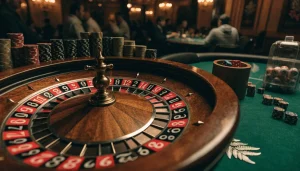
A table-game library is a way of grouping games on a site. Craps can therefore be presented alongside other table games, while remaining identifiable as a dice game. The collection provides the setting in which a free craps game may be found; its presence does not, by itself, say anything about the rules or format of a particular title. Those details depend on the game being considered.
This distinction matters because a search for free casino craps games online can refer to different things. It may mean that craps is listed in a free-play area, or simply that a site includes a way to access a craps game without placing a cash wager. The phrase alone does not establish how the game is delivered, what controls it has, or whether it resembles a particular physical table. A library listing is best understood as an indication of where the game sits within a site’s broader selection.
The same point applies when craps is grouped under table games rather than dice games. These labels describe how a site organises its content; they do not change the central identity of craps. For someone looking for a craps table online without a cash stake, the library is the relevant context: it is where a site may make a free version visible among its other games. The label does not guarantee that every site uses the same categories or presents its games in the same way.
A free craps game in a casino library should also be distinguished from a claim about a particular variation. Searches may mention familiar craps or less familiar forms, including crapless craps. A general library entry, however, does not establish which form is available. The presence of craps in a free table-game collection is not evidence that a specific variant is included. Identifying a game requires attention to its own title and description, rather than assuming that all entries use the same rules or format.

Nor does a library label provide a complete description of the experience. It indicates a place within a site’s game selection, not necessarily the source of the game, the way it is displayed, or the options associated with it. Those matters are separate from the basic fact that many sites include dice games such as craps in free table-game libraries. Consequently, broad descriptions such as “free online craps games” can cover a range of presentations without naming one particular game.
This setting can be useful for understanding why craps appears in collections that also contain other casino table games. It is not necessary for every listing to stand alone as a dedicated craps destination: the game may simply be one choice among a wider selection. Conversely, seeing craps in a library does not imply that every game in that collection is available in a free format. The relevant point is specific to the listing being viewed.
The terms “free craps” and “casino table games” can also be read too broadly if the library context is overlooked. They describe the relationship between a game and the site’s collection, not a promise about a game’s features. A listing can establish that craps is included among free table games, but the category alone should not be used to infer a particular variant or a particular interface.
For New Zealand readers, the practical description is therefore limited but clear: craps is among the dice games that many sites place in free table-game libraries. That explains where a free online craps game may appear, without implying that one uniform catalogue, format, or set of features applies across sites. The library is the setting; the individual game listing supplies the specific identity.
What Free Craps Simulators Can and Cannot Do
A free craps simulator provides a way to practise without staking money. Demo games use virtual credits, which have no cash value: they cannot be withdrawn or converted into real winnings. This distinction matters because a simulated balance is part of the practice environment, not a record of funds held for a player.
The useful role of a simulator is instructional. It allows the rules and sequence of play to be explored without financial risk. Repeated practice can help make the game’s procedures more familiar, but it does not establish that a player will make a profit in real-money play. Nor does a virtual-credit balance demonstrate that a particular betting approach is effective. Results in a simulation are not a promise or reliable forecast of later outcomes.
The same limit applies to claims about winning or withdrawing. A balance displayed during free play is not money that can be claimed, and success in a demo does not create a cash entitlement. Free casino craps can therefore be understood as a practice setting, not as a way to earn funds. The word “free” describes the absence of a cash stake in the demo itself; it should not be read as a claim that virtual credits have monetary value.
A simulator also cannot remove the underlying risks of gambling if play later shifts to cash. The experience of using virtual credits is financially different from risking NZD, so it should not be treated as evidence of how a real-money session will feel or develop. Any move to cash play introduces the possibility of losing money. Players should wager only what they can afford to lose, set a loss limit in NZD before playing, and keep to it. Excessive gambling can cause financial and personal harm.
Practice with a simulator does not make every bet equally suitable. Proposition bets have poor odds and a high house edge, and should not be mistaken for a sound route to winning. No simulator can turn such bets into reliable opportunities or guarantee a favourable result. The purpose of demo play is narrower: learning the rules and becoming familiar with the game without staking money.
The label “craps simulator” alone does not establish what features a particular demo includes or how closely it reproduces a real-money game. Its meaningful, supported function is practice with virtual credits. That can help clarify the mechanics, but it cannot supply withdrawable funds, prove future profitability, or eliminate the risks associated with gambling for money.

Browser Play, Downloads, and Automated Table Functions
The distinction between browser play and a download concerns how software is accessed, not what the word “free” means. A browser-based game is opened through a web browser, while a downloadable game requires software to be installed on a device. Neither format, by itself, establishes whether a particular craps game is free to play, whether it uses virtual credits, or whether it involves a cash balance. Those details depend on the game’s stated terms and mode.
This distinction matters when comparing searches for craps for free with searches for a free craps download. A download is not automatically a no-cost game, and an online game that needs no download is not automatically a demo. The terms describe access or installation, not the financial conditions of play. A page may use “free” to describe a practice mode, but the label alone does not establish what happens after that mode ends or whether any other play is offered.
What “no download” describes
When a game is described as playable without a download, the phrase indicates that access is through a browser rather than a separate installation. It does not establish that every device will support the game, that a particular game is available in New Zealand, or that it can be played without an account. Those questions are separate from the technical distinction and cannot be settled by the phrase “no download” alone.
The same applies to searches for free craps online without a download. They combine two different ideas: the way a game is accessed and whether play costs money. A browser-based game may have a free-play mode, but the access method is not proof of that mode. Conversely, a game that can be downloaded may still require a paid account or offer a mode with different conditions. The relevant distinction is the game’s own description of its play mode, rather than the presence or absence of an installation step.

A browser interface may also change as software is updated or as a device’s browser changes. A downloaded application is installed on a device and may have its own update process. These are general differences in software delivery; they do not confirm that a particular browser game or download is supported. For craps for free with no download, the practical question is therefore whether the game is explicitly presented as a free-play mode and whether it opens in the browser being used.
Automated table roles
A physical craps table distributes tasks among table positions and the people working at them. In online craps, those functions are automated. The interface handles the actions that would otherwise be coordinated around the table, allowing the game to proceed without the same physical arrangement of participants and staff.
Automation changes how the interaction is presented, but it does not change the basic meaning of the bets. Controls on screen replace actions taken at a table, and the software manages the game’s progression. This is a description of the online format, not evidence that an online game reproduces every feature of a physical table. In particular, the presence of an animated table or dice does not by itself show how the underlying game is operated.
The automated format can make the table’s procedures less visible. At a physical table, actions and responsibilities are distributed among people; online, the interface presents them as software functions. That difference can affect how easily a new player recognises what is happening, but automation should not be confused with a change in the meaning of the game or a method for improving its outcomes.
Free play and cash play
A no-download format should not be treated as a financial safeguard. Demo games use virtual credits that cannot be withdrawn or won as real money, and they allow practice without risking money. A browser game can still be a cash game if it is offered on that basis. The format alone does not determine which applies.
Where online play involves a cash balance, funds are credited automatically in online settings. That operational feature does not remove the risk of losing money, nor does it make a browser-based game equivalent to a demo. Any cash play should be limited to what can be afforded to lose. A loss limit in NZD should be set before playing and kept to; excessive gambling can cause financial and other harm.
Downloads also warrant care because an installation is a separate action from opening a browser page. A claim that a craps download is free should be assessed as a claim about price, while the game’s terms should clarify whether the play itself is a demo or involves money. The same checks apply to a free craps game with no download: browser access is not enough to establish that no funds are at risk.
Craps Games and the Outcomes of Two Dice
At its most basic, craps is a dice game in which bets concern the outcome of a pair of dice being rolled. The dice are central to the game: the subject of a wager is what they produce together, rather than the result of a card draw or a spin. This definition applies whether the game is described as a free craps game or simply as craps.
The phrase “craps for free” describes a way of encountering the game, not a different object of play. The defining feature remains the pair of dice and the outcomes on which bets are placed. Free access does not, by itself, change what the game is about. Nor does the label identify a particular table, interface or set of rules.
This distinction is useful when interpreting broad descriptions of free craps games. A title may indicate that a craps game can be played without a cash stake, but the name alone does not establish how the game is presented or which betting options it includes. The underlying game can be described without assuming details about a specific product.

The same basic definition applies to people looking to play free craps games: the activity still centres on predicting outcomes generated by two dice. The word “free” concerns the context in which the game is offered; “craps” identifies the dice game itself. Keeping those meanings separate avoids treating every free version as an identical product or assuming that the label guarantees a particular format.
Craps is therefore best understood first as a game of wagers on paired-dice outcomes. That simple description provides a useful starting point before considering the setting in which a game appears. It also keeps the definition distinct from claims about a named version, a particular interface or the availability of any one product in New Zealand.
Free Online Craps and Additional Bets
Once a point has been established, online craps may allow additional wagers, including proposition bets. These sit alongside the bets already made; they do not change the point itself or determine when the round ends. The option to add a wager is therefore a separate decision from following the main sequence of play.
The term “proposition bet” covers wagers on specific outcomes rather than simply whether the Pass Line succeeds. Online layouts may present these as distinct choices, but a label or prominent button does not make a wager favourable. Proposition bets have poor odds and a high house edge, so they can carry a greater expected cost than lower-house-advantage options. Their availability should not be treated as evidence that they are suitable for a particular play style.
A search for a particular feature, such as a Fire Bet, reflects interest in an additional wager rather than in the basic course of a craps round. No specific game or feature needs to be assumed when considering how these bets work in general: the relevant distinction is that additional wagers are separate from the central point-based bet. The rules and payouts for any named feature depend on the game offered, so its title alone is not enough to assess its terms.

In a free online setting, additional betting choices may be encountered as part of the table interface. Their presence can make a session more complex, since several wager types may be available while the round continues. Free play can help make those choices visible, but it does not establish how a cash version would operate or whether a particular feature is offered for real-money play.
A restrained approach is to distinguish learning the sequence from testing every available wager. Proposition bets merit particular caution because of their high house edge; they should not be mistaken for a way to improve the chance of winning. No betting pattern removes the underlying risk. Anyone choosing to gamble should wager only what they can afford to lose, set a loss limit in NZD beforehand, and keep to it. Excessive gambling can cause financial and other harm, and additional betting options may increase the risk of losing control of spending.
Free Craps Practice and Virtual Balances
Free craps practice separates learning the game from risking a cash balance. In a demo version, play uses virtual credits, so a session does not put NZD at stake. This makes practice useful for becoming familiar with the table’s sequence and controls without treating a virtual balance as money available to win or withdraw.
That distinction matters when assessing a result. A virtual balance can rise or fall during a session, but it does not represent a financial gain or loss. Demo play also cannot show what a cash session would feel like when funds are at risk. It can support familiarity with the game, but it does not establish that a player will perform similarly in real-money play.
The phrase “craps for free” can describe a practice setting, but it does not mean that every online version is free to use or that a particular game format is available. A search for crapless craps, for instance, is not evidence that a free demo of that format is offered. Availability and access conditions depend on the particular service, and they should not be inferred from the existence of free practice in general.
Do
- Use demo play to build familiarity with rules
- Use simulators to learn table sequences
- Treat virtual balances as practice tools
Don't
- Treat virtual success as a profit forecast
- Assume demo play removes cash risks
- Use virtual wins to justify raising cash limits
A free craps strategy is best understood as a way to learn the rules and make decisions in a no-stakes setting, not as a method for ensuring a win. Practice can clarify how bets are presented and how a round proceeds, but outcomes remain uncertain. Repeated success with virtual credits does not provide a reliable forecast of cash results, nor does it remove the risk of losing money when play involves NZD.
For that reason, demo practice and cash play should remain clearly separate. Before risking funds, a player should decide on a loss limit in NZD and stick to it, and should bet only what can be afforded to lose. A virtual balance is not a reason to raise that limit or to continue after reaching it. If gambling begins to affect finances, wellbeing, or daily responsibilities, stopping and seeking support is more important than continuing practice or play. Excessive gambling can cause serious harm.
Free play can therefore serve as a low-risk way to build familiarity, but it is not a financial substitute for cash and does not make later gambling safe. Its value lies in practice; any conclusions about money should be based on the fact that real-money play carries a risk that demo sessions do not.

Odds, Bet Choices, and Limits in Craps
Craps bets do not carry the same house advantage. Proposition bets are identified as having poor odds and a high house edge, so their potential appeal should not be confused with favourable value. A high house edge means the bet is comparatively costly over repeated play; it does not predict the result of an individual roll.
Pass Line bets and Free Odds are identified as options with a lower house advantage. “Free Odds” is the name of a wager, not a no-cost credit. A lower house advantage is a comparison between bet types, not a promise of profit or a method that removes the casino’s advantage. It also does not make a cash wager risk-free. No betting choice can guarantee a win, and a calculation cannot turn an unfavourable outcome into a favourable one.
An odds calculator can be useful only when its inputs reflect the rules and payouts of the game being considered. A result depends on those details, so a figure from a calculator should not be treated as universal. Where the relevant payout information is unavailable, a precise comparison cannot be established. In particular, a calculator does not show that a particular session will produce a return.

Free practice and cash play have different consequences. A virtual balance can be used to understand how choices affect play, but it does not establish what a cash session will return. In cash play, losses are real, and repeated bets can increase the amount at risk. The lower house advantage associated with Pass Line and Free Odds does not change that basic risk.
Before any cash play, a loss limit should be set in NZD and treated as firm. Bets should be restricted to money that can be afforded to lose; once the limit is reached, play should stop rather than be extended to recover losses. Excessive gambling can cause financial and personal harm. If gambling begins to affect wellbeing or essential spending, stopping and seeking support is safer than continuing to bet.
Free Craps Apps: What the Evidence Supports
A mobile format does not, by itself, establish that a craps app offers a useful way to practise. The relevant distinction is whether it provides demo play: virtual play can help users learn the rules without risking money.
App descriptions should not be treated as proof that a product includes a practice mode, or that its play reflects every rule or table setting a user might encounter elsewhere.
Craps for free through an app is therefore best understood as a possible learning format, not as a way to earn or withdraw money. Practice can support familiarity with rules, but it does not make later cash play predictable or improve the chance of a particular outcome. Demo play should not be confused with gambling using an NZD balance.
No app format removes the risks associated with gambling. Excessive play can cause harm; any cash gambling should be limited to money that can be lost without affecting essential costs. A loss limit in NZD should be set in advance and kept.
New Zealand’s Online Casino Licensing Context
New Zealand’s online casino rules changed in 2026. The Online Casino Gambling Act 2026 took effect on 1 May, establishing the country’s first domestic licensing system for online casino gambling. This is distinct from the earlier position: the Gambling Act 2003 did not permit online casinos to be based in New Zealand, while offshore services were not licensed or supervised by a New Zealand regulator. Customers using offshore sites during that period had no domestic government recourse.

The new Act includes a transition period from 1 May to 1 December 2026. Providers that were already offering services to people in New Zealand before the law took effect may continue during this period under its transitional provisions. That permission is time-limited: a provider that has not applied for a licence must stop conducting online casino gambling in New Zealand by 1 December 2026. If an application is declined, the provider must end its online casino operations in the country and leave the market. The full licensing regime is not expected to be operational until 2027, and unlicensed operation is expected to become an offence around the middle of that year.
The Department of Internal Affairs oversees the online casino licensing framework. The Gambling Commission considers and determines casino licence applications, issues licences, and approves changes to licence conditions. These are separate regulatory functions: oversight of the framework does not mean that every site accessible from New Zealand has been assessed or licensed.
The Act also sets expectations for operators that receive licences. They must use stricter age and identity verification systems. Operators without a licence may face enforcement action and fines of up to NZ$5 million. During the transition, providers are prohibited from advertising online casino gambling to people in New Zealand. These requirements concern providers and their conduct; the presence of a game, including a craps game available without payment, does not establish that the provider holds a New Zealand licence or has a particular legal status.
Accordingly, “craps for free in New Zealand 2026” describes a way of accessing a game, not a licensing category. Free access alone does not show whether a provider falls within the transitional provisions, has applied for a licence, or is authorised under the new regime. The regulatory position depends on the provider and its status under the Act, rather than on whether a session uses real money or virtual credits.
Licensing information is relevant to the wider risks of online gambling, but it does not remove those risks. Gambling can become excessive and cause harm. Any gambling with money should be limited to funds that can be lost without affecting essential needs; a loss limit in NZD should be set in advance and kept to.
What are the basic rules of craps?
On the come-out roll, a Pass Line bet wins on 7 or 11 and loses on 2, 3 or 12. Any other total sets the point; the shooter rolls again, and the Pass Line bet wins if the point comes before 7.
How do I become a better craps player?
Practise in a free demo game to learn the rules without risking money, and keep track of whether the round is on the come-out or point phase. Pass Line and Free Odds bets have a lower house advantage than proposition bets.
Is the pass line a good bet?
Yes. It has a lower house advantage than proposition bets, and it wins if the come-out roll is 7 or 11 or, after a point is set, the point comes before 7.
Roulette & Other Casino Games in New Zealand
Content created by the «casinoinfonz.com» team