
Understand the Wheel Before You Place a Bet
 Available in US
A practical guide to the single-zero wheel, table bets, free-play terms, and the limits of roulette strategies.

European Roulette’s Single-Zero Wheel and Core Odds
European Roulette is defined by a wheel with 37 pockets: a green zero and numbered pockets from 1 to 36. The numbers are divided between red and black pockets, while zero is green. On a standard wheel, each pocket is a distinct possible result; the single zero is the feature that sets the game’s basic probability structure.
The house edge is 2.70%. This figure describes the casino’s mathematical advantage across play over time, not a deduction made from every individual bet. A particular spin can produce any pocket, and a result that favours a player does not alter the edge built into the game. The figure is therefore useful as a baseline for understanding the game, but it does not predict the outcome of a session.
The same single-zero structure underlies European Roulette whether the game is presented through a digital interface or through a live table. The presentation may differ, but the defining wheel and its stated house edge remain the same. For anyone examining European Roulette online or in a casino setting, those figures provide a consistent starting point before considering the table layout or the rules attached to particular bets.
Choosing European roulette in New Zealand can involve weighing the information available about each casino. This list gives a concise reference point for considering the options.
-
N1 Casino
- License
- Malta Gaming Authority, licence no. MGA/B2C/394/2017
N1 Casino lists a Malta Gaming Authority licence, number MGA/B2C/394/2017.
-
Wintino
- Payout speed
- 1-3 business days
Wintino lists a payout speed of 1–3 business days.
-
Neospin
- License
- Tobique Gaming Commission, licence no. 0000064
Neospin lists a Tobique Gaming Commission licence, number 0000064.
-
7Bit Casino
- License
- Tobique Gaming Commission, licence no. 0000091
7Bit Casino lists a Tobique Gaming Commission licence, number 0000091.
-
Zotabet
- License
- 07017519840
- Payout speed
- 1-3 business days
Zotabet lists licence number 07017519840 and a payout speed of 1–3 business days.
-
BitStarz
- License
- Curaçao Gaming Authority, licence no. OGL/2024/165/0185
BitStarz lists a Curaçao Gaming Authority licence, number OGL/2024/165/0185.
-
Play Grand
- License
- Malta Gaming Authority, licence no. MGA/B2C/370/2017
Play Grand lists a Malta Gaming Authority licence, number MGA/B2C/370/2017.
-
Lamabet
- Payout speed
- 1-3 business days
Lamabet lists a payout speed of 1–3 business days.
-
Ricky Casino
- License
- Tobique Gaming Commission, licence no. 0000002
Ricky Casino lists a Tobique Gaming Commission licence, number 0000002.
The term “house edge” can be read as the casino’s expected share of the action under the game’s rules. It is a theoretical measure, not a statement that the casino will win on every round or that a player will lose a fixed amount. Short runs of results can differ substantially from the long-run expectation. In the same way, the presence of a single green pocket does not make a round predictable; it identifies one of the outcomes included in the wheel’s probability structure.
For European Roulette in New Zealand in 2026, the defining numerical reference remains the single-zero wheel and its 2.70% house edge. Keeping those two details in view helps distinguish the game’s underlying structure from the interface or setting in which it is played.
Trying European Roulette in Free Online Play
A free European Roulette session can provide a way to examine the online version of the game without placing a real-money wager. Its value is mainly observational: it can show how a particular game presents the wheel, the table and the sequence of a round. It does not change the mathematics of European Roulette. The standard wheel has 37 pockets, with a single zero, and its house edge is 2.70%.
That figure remains relevant whether a round is played for money or in a no-stake mode. A free online European Roulette game may reproduce the same single-zero structure as a real-money version, but the absence of a stake changes the financial consequences of a result, not the wheel’s underlying odds. A displayed run of wins or losses in free play therefore does not establish that a later real-money session will behave similarly.
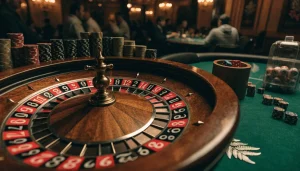
What a free online session can show
An online European Roulette game can make the sequence of a round visible: a wager is entered, the wheel spins, a pocket is selected and the result is displayed. In a free session, this can help clarify how the software communicates those events. It may also make unfamiliar controls easier to inspect without a financial outcome attached to each spin.
The interface itself is not the game’s probability model. A wheel animation, a history panel or a simulated balance can explain how the particular software is arranged, but none of these displays changes the number of pockets. European Roulette remains a 37-pocket game with one zero and a 2.70% house edge. Any assessment of a version should therefore distinguish the visual presentation from the mathematical structure.
Free European Roulette games online may differ in design and operation. Some may use a more traditional table presentation, while others may render the wheel and results in a different style. Those differences can affect what is visible on screen, but they should not be treated as evidence that one version offers better chances. The relevant question is whether the game is identified as European Roulette and whether its stated rules match the single-zero format.
A free session can also serve as an online roulette simulator in a limited sense: it lets a person observe simulated rounds and learn how the interface responds. It cannot establish how a particular real-money session will turn out. Nor does a sequence of simulated results provide a reliable forecast for future spins. The outcome history belongs to the session already observed; it does not change the wheel’s structure.
Moving from free play to real money
European Roulette online for real money has a different practical consequence from free play because a losing result can reduce a player’s funds. The underlying wheel and house edge, however, do not become more favourable merely because a wager is attached. The distinction is consequential: a free game may be useful for familiarisation, while real-money play exposes the stake to loss.
A free European Roulette game online should not be treated as proof that a paid version will have identical presentation or conditions. A game may be offered in different formats, and the information shown before play is more relevant than assumptions based on another interface. The name alone does not establish every feature of a particular online European Roulette game.
Searches for an online European Roulette cheat often reflect a hope that software can be made to produce a chosen result. A simulator does not provide such a method. Observing simulated rounds cannot alter the one-zero wheel or remove its house edge, and a display of past outcomes is not a means of controlling later ones. Free play may show how the game works on screen; it cannot demonstrate a reliable way to win every time.
The same distinction applies to claims about learning to win online through practice. Familiarity with the interface is not a change in probability. Repeated free rounds can make the sequence of play more recognisable, but they do not establish that future results can be predicted. The 2.70% house edge remains the baseline for standard European Roulette.

Accordingly, free play is best understood as an opportunity to inspect an online presentation, not as a test that certifies future performance. It can help separate interface questions from the game’s fixed wheel structure. The latter remains constant across free and real-money contexts: 37 pockets, one zero and a 2.70% house edge.
Free Play, Free Spins and What the Terms Mean
“Free play” and “free spins” describe different arrangements. Free play generally means using a game in a mode where the player does not stake cash. Free spins, by contrast, are a promotional benefit: a stated number of spins is provided under offer conditions, and any resulting winnings may be subject to further rules. The distinction matters because a no-cost game session is not the same as a bonus that can produce withdrawable winnings.
A free European Roulette game may be presented as a practice or demonstration mode. Its purpose is to let someone explore the interface and place simulated bets without risking a cash balance. That does not establish that a particular casino offers the mode, nor does the label alone establish whether registration is required or how the game is accessed. “No download” may describe browser-based access, but it is not a guarantee that every free game runs in a browser or that every device is supported.
Free spins are more commonly associated with games built around individual spins, rather than a roulette round in which bets are placed before the wheel is spun. If a promotion uses the term in relation to roulette, its own description should specify what the spins apply to and how winnings are calculated. The term should not be taken to mean that roulette bets can be placed without conditions, or that any resulting amount can automatically be withdrawn.
Do
- Read the full offer conditions
- Identify the specific wagering requirements
- Check for offer expiry dates
Don't
- Assume "free" means unrestricted cash
- Conflate free spin and bonus money rules
- Ignore withdrawal restrictions
Reading the offer conditions
In New Zealand, promotional terms can set out who qualifies, how much wagering is required, when an offer expires, which games contribute towards the wagering target, and what restrictions apply to withdrawals. These provisions determine the practical value of an offer more than the word “free” does. Eligibility may be limited, and a game can contribute differently from another game towards a wagering requirement. An expiry condition can also make an offer unusable if its requirements are not completed in time.
For bonus money, the stated condition is to wager the bonus 50X within 30 days. Winnings from free spins carry a separate requirement: they must be wagered 50 times within 7 days. The two rules should not be conflated. A free-spin award is not simply bonus money with the same deadline, and the relevant terms should identify which requirement applies to each benefit.
Withdrawal restrictions are also material. Submitting a withdrawal request voids any active or pending bonuses. This means that a player who requests a withdrawal before completing the applicable requirements may lose the bonus, even if the offer has not otherwise expired. Whether any associated winnings remain available depends on the offer’s terms; the existence of a bonus does not, by itself, establish that they are withdrawable.
What “free” does not settle
The word “free” can refer to the absence of a cash stake in a practice mode, or to a promotional benefit with conditions. It does not, on its own, show that an offer is available to every account, that a player qualifies, or that any winnings can be kept without wagering. Nor does a free-play label establish that a real-money game uses different roulette rules from its standard version.
A careful reading separates the game mode from the promotion. The game description explains whether play uses simulated or real stakes; the offer terms set out eligibility, expiry, contribution rules, wagering and withdrawal restrictions. If those details are not clear, the label “free” is insufficient to determine what the player receives or what must happen before winnings can be withdrawn.
European and American Roulette: Wheel and Payout Differences
The main difference between European and American Roulette is the wheel’s pocket layout. European Roulette has 37 pockets, with one zero. American Roulette has 38: one zero and one double zero. That additional pocket changes the probability of a winning result on a given bet, even though the variants share many familiar roulette bets and payout structures.
The house edge makes the effect measurable. European Roulette has a house edge of 2.70%, compared with 5.26% for American Roulette. The gap arises from the extra pocket on the American wheel: when a bet’s payout stays the same but the chance of winning falls, the expected return is less favourable. The house edge is a long-run mathematical measure, not a prediction of what will happen in any particular round.
Payout percentages are another way to express expected return. A specialist review reports a payout percentage of 97.30% for European Roulette and 94.70% for American Roulette. These figures correspond to the stated house edges, but they should be understood as theoretical percentages, not as a promise about results from a particular session. A short sequence of spins can differ substantially from a long-run expectation.
| Variant | Wheel pockets | House edge | Reported payout percentage |
|---|---|---|---|
| European Roulette | 37, including one zero | 2.70% | 97.30% |
| American Roulette | 38, including zero and double zero | 5.26% | 94.70% |
The table isolates the wheel-based difference rather than suggesting that one variant guarantees a better outcome. The payout percentage describes the expected return across repeated play under the stated game rules; it does not indicate how much a player will receive from an individual bet. Both games remain games of chance, and a bet can lose regardless of the variant.
The term “number” can refer either to a pocket or to a value shown on the wheel. For European Roulette, the relevant wheel count is 37 pockets, one of which is zero. The American wheel adds a separate double-zero pocket, bringing its total to 38. This is the key distinction behind the difference between European and American Roulette; the comparison does not depend on changing the standard payout for a winning bet.
European Roulette therefore has the lower house edge and the higher reported payout percentage of these two variants. The difference is mathematically meaningful, but it does not make European Roulette predictable or establish that a particular round will be favourable. The wheel layout determines the baseline odds, while the result of each spin remains uncertain.
Reading the Roulette Table and Placing Bets
A European Roulette table presents the betting area on felt or on a digital screen. Its numbered grid is separate from the wheel: the layout is designed to show which number or group of numbers a bet covers, not to reproduce the order of pockets around the wheel. The zero has its own marked space, distinct from the red and black number spaces.

A chip placed on a number’s own space is a bet on that number alone. Positions along the lines and at the corners of the grid indicate combinations of neighbouring numbers. Other marked areas cover broader groups, such as a row, a column, a dozen, or an outside category such as red or black. The placement matters: a chip on a boundary can represent a different bet from one placed wholly inside a number’s space.
The table’s paytable explains the return associated with each bet category. It should be read alongside the marked betting area, since similar-looking positions can cover different selections. A European Roulette payout table does not make a bet more or less likely to win; it records how the game pays when that selection wins. The displayed rules are the relevant reference when a digital table uses a layout or interface that differs from a physical one.
Zero is neither red nor black, and it is not part of the even-money outside categories. It can be selected directly in its own space. To establish what a winning zero bet returns on a particular table, the paytable should be checked; the table display, rather than an assumption based on another game, identifies the applicable payout.
- Check the table's paytable for payouts
- Verify the exact area covered by the chip
- Confirm the bet category on the interface
- Distinguish between table and wheel-based bets
Called bets work differently from choices made by pointing to areas on the felt. Their groups are defined by the positions of numbers on the wheel, rather than by the rows, columns, or other markings on the table. This distinction matters when a game offers called bets through a menu: the selection refers to a wheel-based group, even if the interface then displays a confirmation on the betting area.
On a physical table, chips are placed directly on the relevant number or boundary. In an online interface, the same distinction is represented through selectable positions or controls. A screen may also provide a paytable panel and a betting-history display, but those features do not change what the selected area covers. Play with play money can be useful for learning where the controls are and how the layout responds, while the table rules remain the reference for payouts.
Before a round is accepted, the selected positions and the displayed bet categories should be checked together. This is particularly useful for boundary placements and wheel-based called bets, where the selection may not correspond to a single numbered space on the felt. A clear reading of the layout identifies what has been covered; it does not alter the outcome of the spin.
Bet Odds, Zero and French Roulette Rules
On a single-zero European wheel, zero is the feature that gives the house its mathematical advantage. An even-money outside bet pays an amount equal to the stake when it wins, but zero does not count as either red or black, odd or even, or low or high. Without a special rule, the stake on such a bet is lost when zero appears. The same principle affects other bets: zero is a separate pocket, not part of the numbered groups used to settle them.

French Roulette retains the single-zero wheel used in European Roulette but may add rules that change how eligible bets are settled. La Partage and En Prison concern even-money outside bets, and come into effect only when zero is spun. They do not alter the wheel or apply to every kind of wager.
Under La Partage, a zero result returns half of an eligible stake; the remaining half is lost. This reduces the cost of zero compared with standard European Roulette, where the full stake on the bet is collected. The rule changes the expected loss on these bets, rather than making them immune to losses: ordinary losing outcomes still cost the full stake.
En Prison handles zero differently. Instead of immediately settling an eligible even-money bet as a loss, the stake remains in play for the next spin. If that spin produces a winning result for the original bet, the stake is returned, but there is no profit from it. If the next spin loses, the stake is collected. Thus, the rule delays settlement and can preserve the stake in one outcome; it does not turn the original bet into a winning payout.
The mathematical effect of either rule is substantial for the eligible even-money bets. When La Partage or En Prison applies, the house edge for French Roulette falls to 1.35%, compared with the 2.70% edge of standard single-zero European Roulette. The reduction follows from the treatment of zero, not from a different number layout. It is specific to bets covered by the rule; other bet types do not receive the same protection.
La Partage
A zero result returns half of an eligible even-money stake, while the other half is lost.
En Prison
An eligible stake remains in play for the next spin after a zero; if it wins, the stake is returned without profit.
Standard European
Without special rules, the full stake on an even-money outside bet is lost when zero appears.
These distinctions matter when comparing the odds attached to a European-style table. A single-zero layout alone does not establish that La Partage or En Prison is available. The table’s stated rules determine whether zero causes a full loss on an even-money outside bet, a partial loss under La Partage, or a carried stake under En Prison. French Roulette is therefore more favourable for those eligible bets when either rule is in force, while the underlying outcomes remain uncertain.
A stated payout on a winning bet should also be read separately from the treatment of zero. The payout describes what happens when the selected outcome wins; the zero rule determines how certain bets are settled when the ball lands in that pocket. The distinction is relevant to odds because the house advantage depends not only on the nominal payout, but also on how the game resolves zero.
Roulette Betting Strategies and the Limits of Prediction
A European Roulette betting strategy can organise stake size, bet selection or the conditions under which play stops. It cannot make a future result more predictable. Each spin is independent: earlier outcomes do not change the probability of outcomes on later spins. A run of one colour, number range or parity therefore provides no evidence that the opposite result is due.
This distinction matters when assessing claims about roulette tactics. A method may prescribe a sequence of bets, but following that sequence does not influence the wheel. Nor does keeping a record of previous spins establish a reliable forecast for the next one. Past results describe what has happened; they do not determine what happens next.

Betting systems that increase or otherwise alter stakes after wins or losses change the pattern of financial exposure, not the underlying random process. The Martingale system, for instance, is not a winning strategy: raising stakes after losses cannot ensure that a later win will recover earlier losses. A sequence of losing spins can continue, and larger stakes can increase the amount at risk. More generally, no staking plan removes the house edge or guarantees a profit.
Choosing particular numbers or bet types has a different effect from predicting results. It changes how a winning or losing spin affects the stake, but does not make the chosen outcome more likely because it has been selected according to a system. Covering more outcomes also does not provide a guaranteed strategy: the bets still face the game’s rules, and every real-money bet can lose.
A practical approach is therefore to treat any plan as a way to set boundaries, not as a forecasting tool. A player may decide in advance how much money is available for play and when to stop, but those limits do not improve the chance of winning. Money set aside for roulette can be lost, so play should never involve more than can be afforded to lose. Continuing to chase losses is especially risky because a prior loss does not make a win more likely on the next spin.
The term “best” strategy has no universal mathematical answer independent of a player’s aims and risk tolerance. A cautious stake pattern may limit the size of individual bets, while another pattern may produce larger swings; neither changes the random outcomes. European Roulette is a casino game, not a slot, and strategy claims should be judged by whether they describe stake management or make an unsupported promise about prediction. The first can shape a session; the second cannot be established by a betting sequence.
Online European Roulette for New Zealand Players
Online European Roulette sits within a changing legal environment in New Zealand. The Online Casino Gambling Act 2026 came into force on 1 May 2026 and established the country’s first domestic licensing system for online casino gambling. The regime is not expected to be fully operational until 2027, so the transition period matters when interpreting claims about licensing.
Providers that were already offering online casino services to people in New Zealand before the Act began may continue doing so until 1 December 2026, subject to the Act’s transitional provisions. This is a temporary arrangement, not confirmation that every site available to New Zealand residents holds a domestic licence. Providers that have not applied for a licence must stop conducting online casino gambling in New Zealand by that date. Unlicensed operation is expected to become an offence around mid-2027.
The Gambling Act 2003 did not permit online casinos to be established within New Zealand. Before the 2026 legislation, overseas online casino services were neither licensed nor supervised by a New Zealand regulator. Those services could still be reached by residents, and players were not subject to a fine or criminal prosecution merely for using an offshore casino. However, customers wagering with offshore sites during that earlier period had no domestic government recourse.
Who oversees the framework
The Department of Internal Affairs is New Zealand’s primary gambling regulator and oversees the online casino licensing framework. Licensing decisions sit with the Gambling Commission: it hears and determines applications for casino licences and is responsible for issuing online casino licences. The Commission also approves changes to licence conditions. These are distinct roles within the framework; general regulatory oversight and individual licensing decisions do not rest with the same body.

During the transition, advertising online casino gambling to people in New Zealand is prohibited. That restriction is relevant to how online offers may be presented and should not be confused with a statement that a particular service is licensed. Once the licensing regime is operating, licensed providers must use stricter age and identity verification processes. Providers operating without a licence may face enforcement action and fines of up to NZ$5 million.
For someone considering European Roulette online, the game’s label alone does not establish the regulatory status of the service hosting it. Nor does the availability of a free game or a real-money table determine whether a provider has a New Zealand licence. The transition dates, the distinction between overseas access and domestic authorisation, and the regulator responsible for licensing are more useful points of reference than promotional language about the “best” online casino.
The legal framework therefore requires attention to timing. The current transition permits qualifying pre-existing providers to continue only until the stated end date, while the full licensing system is still being developed. These arrangements do not amount to an endorsement of any casino or an assurance about the protections available on a particular website.
How to Play European Roulette, Including App Play
A standard European Roulette round follows a simple sequence: bets are placed, the wheel is spun, and the result is settled against the number and colour of the winning pocket. The wheel has 37 pockets, including a single zero; its house edge is 2.70%. Those features remain the same whether the game is presented on a physical table or through an app.
A Roulette Round
-
1
Placing Bets
Select a stake and place it on a number or outcome before the betting period closes.
-
2
The Spin
The wheel spins and the ball settles into one of the 37 pockets.
-
3
Settlement
Winning bets are paid according to the rules, while non-matching bets are lost.
First, the game displays the wheel and a betting area. A player selects a stake and places it on a permitted outcome before betting closes. The selection might concern a specific number or a broader result, such as a colour. The table’s instructions identify the available bets and the return for each, so these should be checked before the round begins.
Once betting closes, the wheel spins and a ball settles into one pocket. The result determines which selections win; bets that do not match it are lost. Any winning stake is settled according to the game’s displayed payout rules. The zero is part of the European wheel, so a result there does not count as red or black, odd or even.
An app generally presents the same sequence through touch controls: choose a stake, tap or drag it to a selection, confirm the bet if required, then watch the spin and settlement. Interface details differ between games, but they do not change the underlying wheel. A roulette simulator can be used to learn this sequence and see how selections are entered, without treating simulated results as evidence about future spins.
Before play, the rules and controls should be reviewed, particularly the betting period and how a placed stake can be changed or removed. During real-money play, outcomes are random and every bet can lose; a previous result does not determine the next one. No system of selecting outcomes changes the wheel’s probabilities. The session should remain within an amount that can be lost without affecting essential spending.
App play therefore changes the way the round is controlled, not the defining structure of European Roulette. The same single-zero wheel and chance-based result govern each spin.
Roulette Bonuses, Championships and Unverified Game Features
A European Roulette bonus is defined by its terms, not simply by the game named in its promotion. Operators in New Zealand may set eligibility rules, wagering requirements, an expiry, game-contribution rules and withdrawal restrictions. These conditions determine whether roulette play counts towards a bonus and what happens to bonus funds or associated winnings.
Bonus money must be wagered 50X within 30 days. Winnings from free spins must be wagered 50 times within 7 days. A withdrawal request voids all active or pending bonuses. These are material conditions: a promotion described as a European Roulette no-deposit bonus should not be treated as unrestricted cash, and its label alone does not establish that it is available to every player. The applicable terms govern eligibility and any additional restrictions.
The European Roulette numbers belong to the game’s numbered wheel, but a bonus offer does not change their role or establish different game rules. Any contribution assigned to roulette, and any limits on how bonus funds may be used, need to be read in the offer terms rather than inferred from the promotional wording.
Claims about European Roulette championships also require precise context. The term could refer to an organised competition, a promotional event or a feature within a particular game. Without defined rules, entry conditions and a description of how results are determined, the label alone does not establish what participation involves or how a winner is selected.
The same caution applies to named variants and advertised features. Lightning Roulette is a named game, but the name by itself does not specify its mechanics, prizes or effect on a round. Such details should be treated as game-specific only where the rules for that version state them. No additional feature follows merely from the word “Lightning,” and a championship claim should not be taken as evidence of a standard roulette format.
A careful comparison therefore separates the underlying roulette game from the promotion attached to it. Bonus conditions are set by the offer, while championship formats and special game mechanics depend on their stated rules. Without those details, stronger claims would be unwarranted.
Roulette & Other Casino Games in New Zealand
Content created by the «casinoinfonz.com» team